Fence and Gate Hardware Guide (Hinges, Latches, and Fasteners)
Fence and Gate Hardware Guide (Hinges, Latches, and Fasteners) - a guide from Cookeville Fence Co., serving the Upper Cumberland region of Tennessee.
A fence is only as good as the hardware holding it together. Wood posts and panels get most of the attention, but hinges, latches, and fasteners are usually what fails first. Most gate problems we see aren't caused by bad lumber or a leaning post. They're caused by hardware that was never rated for outdoor use in the first place.
This guide covers what to look for in gate hardware and fasteners so your fence holds up over time, whatever material you choose.
Why Galvanized (or Stainless) Hardware Matters
Plain steel screws, hinges, and nails will rust. It's not a question of if, only how fast. Once rust starts on a fastener, it weakens the connection and can bleed into the surrounding wood or vinyl, leaving stains that don't go away.
Two coatings solve this for most residential fence work.
- Hot-dip galvanized: steel dipped in molten zinc, which bonds thickly and unevenly but holds up well outdoors. This is the standard for structural fence hardware: posts, brackets, heavy hinges.
- Electro-galvanized: a thinner, more uniform zinc coating applied electrically. Looks cleaner, costs less, but offers less long-term rust protection than hot-dip. Fine for interior or low-exposure applications, less ideal for a gate that takes weather year-round.
Stainless steel is the upgrade option where corrosion resistance matters most: coastal-adjacent climates, hardware near sprinkler systems, or anywhere a homeowner wants to minimize maintenance. It costs more than galvanized, but it won't develop the surface rust that even galvanized hardware can show over many years.
The practical rule: never use plain uncoated steel fasteners outdoors. The few cents saved per screw isn't worth the rust streaks and premature failure.
Hinges: Matching Hardware to Gate Weight
Gate hinges take constant stress. Every swing puts leverage on the hinge, the screws holding it, and the post it's mounted to. A hinge rated for a lightweight picket gate won't hold up under a heavy wood privacy gate or an ornamental iron gate.
A few things to check.
- Weight rating. Heavier gates (solid wood, iron, larger openings) need heavier-duty hinges, often with a larger strap or barrel design that spreads the load across more of the gate frame.
- Adjustability. Gates sag over time as wood settles or hardware wears. Adjustable hinges let you correct sag without rehanging the whole gate.
- Mounting hardware. A quality hinge mounted with the wrong screws is still a weak point. Use fasteners rated for the same exposure as the hinge itself, and make sure they're long enough to bite into solid post material, not just the surface.
- Post strength. Even the best hinge will pull loose from a rotted, undersized, or improperly set post. The post has to be equal to the job before the hinge matters.
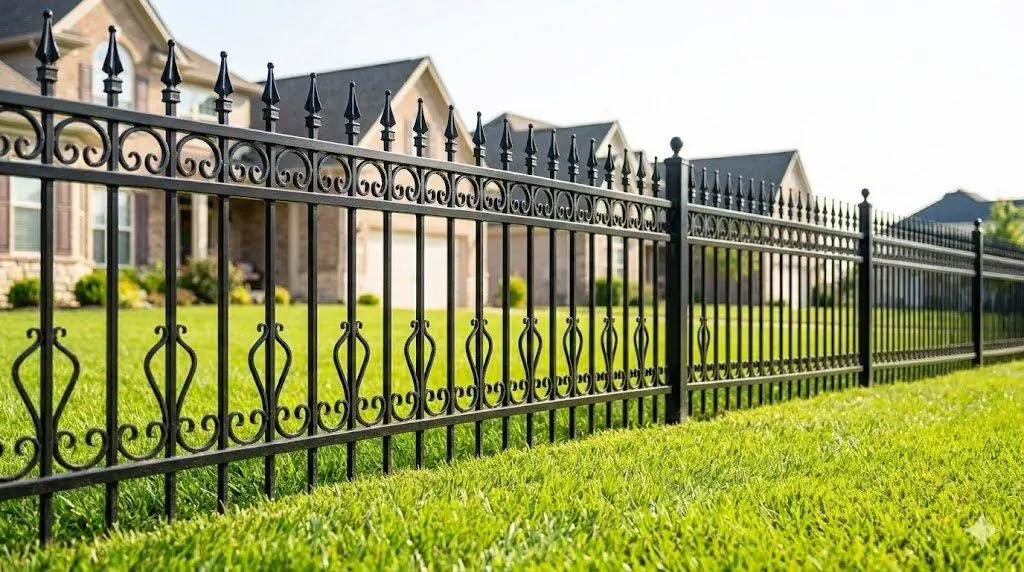
For iron and heavier gates in particular, hinge selection isn't a place to cut corners. See our ornamental iron fencing page for more on what these gates typically require.
Latches: Function First, Then Style
A latch has one job: keep the gate closed reliably, including against wind, kids, and pets pushing on it. Beyond that, there's real variation in style and convenience.
- Gravity latches are simple and reliable for most residential gates. The latch drops into place under its own weight when the gate closes.
- Self-latching designs are worth considering for pool areas or anywhere a gate needs to close and lock itself even if someone forgets.
- Lockable latches add security for gates facing the street or shared with a rental property, storage area, or anything else that needs to stay secured.
Latch hardware should match the coating standard of the rest of the gate hardware. A galvanized hinge paired with a bare steel latch just moves the rust problem to a different spot on the same gate.
Fasteners: The Detail That Gets Skipped
Fasteners are the smallest part of a fence and the easiest to get wrong. A few practical notes.
- Use hot-dip galvanized or stainless screws and nails for anything exposed to weather, not just the visible hardware.
- Ring-shank or spiral-shank nails hold significantly better than smooth shank in fence construction, especially on rail-to-post connections that take ongoing stress.
- Screws generally outperform nails for gate hardware and anywhere you might need to remove and re-tighten a connection later.
- Match fastener length to the material thickness. Too short, and the connection is weak. Too long, and you risk splitting the wood or punching through the far side.
Materials, Hardware, and Long-Term Performance
Hardware needs shift somewhat by fence material. Wood gates put more stress on hinges as the wood absorbs and releases moisture through the seasons. Vinyl gates need hardware designed for the specific panel and frame system, since standard wood hinges don't always transfer to vinyl construction. If you're still comparing materials, our wood fencing and vinyl fencing pages cover the tradeoffs in more detail.
Getting the Hardware Right the First Time
Most gate hardware failures are avoidable. The pattern we see is usually the same: undersized hinges on a heavy gate, bare steel fasteners left to rust, or a latch that was never meant for daily use. None of it is complicated to get right, but it does take knowing what to spec before the gate goes up.
If you're installing a new gate or dealing with one that already sags, drags, or won't latch, we're glad to take a look. Call us at (931) 651-8856 for a free estimate, or see our gate installation and repair page for more on how we approach this work.
Pool gates carry their own hardware requirements. See pool fence installation in Cookeville.
Request a Free Estimate
Fill this out and we'll get back to you, or call or text (931) 651-8856.