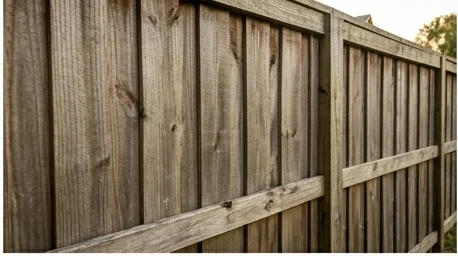
Matching a New Fence Section to an Existing Fence
Matching a New Fence Section to an Existing Fence - a guide from Cookeville Fence Co., serving the Upper Cumberland region of Tennessee.
Adding onto an existing fence, replacing a damaged section, or extending a fence line after a property change all raise the same question: will the new work look like it belongs with the old? A mismatched section is a frustrating way to end a fence project, and most of the problems are avoidable if you check the right things before you order material.
Why matching is harder than it looks
Fence materials change over time, sometimes within just a few years. Manufacturers update board profiles, rail sizes, post spacing standards, and powder-coat colors. A vinyl fence bought in 2019 may not have an exact match in today's catalog, even from the same manufacturer, because the extrusion molds themselves get revised. Wood ages and weathers unevenly depending on sun exposure, so a new cedar picket next to a ten-year-old one will look different on day one, even if the lumber came from the same supplier. That doesn't mean matching is impossible. It means you have to plan for it instead of assuming it'll just work out.
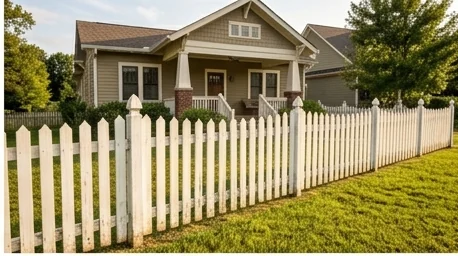
Start with what you actually have
Before you order anything, identify the existing fence as precisely as you can:
- Material and grade (cedar vs. pressure-treated pine, cellular PVC vs. standard vinyl, chain link gauge, iron picket spacing)
- Panel and picket dimensions, including height, width, and spacing between pickets
- Post size and post spacing on-center
- Fastener type and rail configuration (two-rail vs. three-rail)
- Color or stain, including whether it's a factory color or a site-applied stain
If you still have paperwork from the original install (a receipt, a product tag, a contract that names the material), dig it up. If not, bring a section to a supplier or installer for a side-by-side comparison. That's more reliable than trying to match from memory or photos.
Where exact matches are realistic
| Material | How well it matches | The main variable |
|---|---|---|
| Chain link | The most forgiving, a new section usually blends in | Gauge, mesh size, and galvanized or vinyl-coated finish are standardized |
| Ornamental iron and aluminum | Fairly matchable when spacing and rail height are measured accurately | Color, since a sun-faded powder coat will not match a fresh coat |
| Split rail | Generally easy to blend | Reads as rustic and irregular by design, so grain and color variation hide well |
| Vinyl | In between, matchable within a manufacturer's current line | Whether the original profile has been discontinued |
| Wood privacy and picket | The hardest to match exactly | Weathering, board width, and stain absorption all vary |
Chain link is the most forgiving material to match. Gauge, mesh size, and galvanized or vinyl-coated finish are standardized enough that a new section usually blends in without much trouble, especially once it weathers for a season.
Ornamental iron and aluminum panels are also fairly matchable if you measure the picket spacing and rail height accurately, since most manufacturers build to a handful of common spacing standards. Color is the bigger variable here. A powder-coat finish that's faded from years of sun won't perfectly match a fresh coat, even in the "same" color code.
Split rail is generally easier to blend because the material reads as rustic and irregular by design. Small variations in wood grain or color are far less noticeable than they'd be on a painted or precisely milled fence.
Wood privacy and picket fencing is the hardest to match exactly, because weathering, board width, and stain absorption vary so much. Aim for a section that reads as intentional and consistent, not necessarily invisible. Some owners re-stain the entire fence line once new sections go in, so the whole run ages together from that point forward.
Vinyl falls in between. You can usually match panel style and rail size within a manufacturer's current line, but if the fence is old enough that the original profile has been discontinued, an exact match may not exist. In that case, it's often more durable to replace a full run (one side of the yard, one visible elevation) than to patch a single panel into a slightly different profile.
When an exact match isn't possible
Sometimes the honest answer is that the old material isn't made anymore, or close enough, in its current form. A few approaches handle that gracefully:
- Replace by natural break points (corner to corner, gate to gate) instead of mid-run, so the transition falls somewhere the eye already expects a seam
- Choose a complementary style rather than an identical one if the original is discontinued, and treat the change as a deliberate design choice instead of a hidden patch
- Consider replacing a full visible section if the color or material gap would otherwise stand out from the street or a main sightline
Get the measurements right before ordering
A fence section that matches on material but not on height, post spacing, or rail placement will still look wrong. Before you place an order, measure the existing line for post-to-post spacing, top rail height, and ground clearance. Plan the new section to match those numbers, not just the general style.
When to call in a professional opinion
Matching an existing fence is one of those jobs where a quick phone call can save a lot of guesswork. An installer who works with wood, vinyl, iron, and chain link day to day can usually identify a fence style and post spacing on sight, or at least narrow down the likely manufacturers faster than you could searching online. If the existing fence needs repair before a new section goes in, get that looked at alongside the matching question, since repair and extension are often handled in the same visit.
If you're planning an addition, a replacement section, or a repair and want an honest read on whether a match is realistic for your fence, call for a free estimate at (931) 651-8856 or email hello@cookevillefenceco.com.
Request a Free Estimate
Fill this out and we'll get back to you, or call or text (931) 651-8856.