Cedar vs Pressure-Treated Pine: Choosing the Right Wood for Your Fence
Cedar vs Pressure-Treated Pine: Choosing the Right Wood for Your Fence - a guide from Cookeville Fence Co., serving the Upper Cumberland region of Tennessee.
If you're planning a wood fence, it usually comes down to two options: cedar or pressure-treated pine. Both are solid choices, and both can last decades if you install and maintain them correctly. But they behave differently over time, cost different amounts up front, and suit different priorities. Here's what actually separates them.
What Pressure-Treated Pine Is
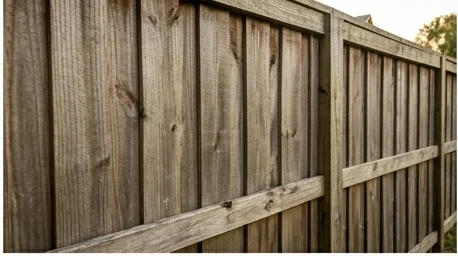
Pressure-treated pine is ordinary softwood lumber forced, under pressure, to absorb chemical preservatives that resist rot, decay, and wood-boring insects. The treatment goes all the way through the board, not just the surface. That's why a cut edge on treated pine still looks greenish or brownish inside instead of raw white wood. It's the most common fence material in the country because it's widely available, consistent in supply, and generally the more affordable of the two.
The preservative does the heavy lifting against rot and insects, so treated pine holds up well in ground contact, like at fence posts, where untreated wood would fail fast.
What Cedar Is
Cedar is a naturally rot- and insect-resistant softwood. It doesn't need chemical treatment because it contains natural oils and tannins that make it inhospitable to decay fungi and pests. That resistance is real, but it's not unlimited. Cedar in direct ground contact still breaks down over time. That's why many cedar fence designs use treated pine or concrete for the posts (the part that stays wet and touches soil) and save the cedar for the boards, rails, and other visible parts above ground.
Cedar is also lighter and softer than pine, so it's easier to cut and work with, and it takes stain more evenly since it has a straighter, more consistent grain.
Appearance
| Quality | Cedar | Pressure-treated pine |
|---|---|---|
| Rot and insect resistance | Natural, from oils and tannins in the wood, does not wash out or wear off | From chemical preservatives forced through the board under pressure |
| Ground contact | Still breaks down over time, so posts are often treated pine or concrete | Holds up well in ground contact, including at fence posts |
| Appearance when new | Warm, rich color with a smooth, straighter, more consistent grain | More visible knots, rougher texture, slight greenish or brownish cast |
| Maintenance | Sealant or stain at installation, reapplied on a regular schedule | Sealant or stain at installation, reapplied on a regular schedule |
| Hardness | Lighter and softer, easier to cut and work with, dents and scratches more easily | Harder in some grades, stands up better to impact |
| Typical use | Front-yard fencing, decorative sections, anywhere curb appeal matters | Privacy and boundary fencing, larger properties where materials add up |
This is where most homeowners decide. Cedar has a warmer, richer color and a smoother, more refined grain right out of the gate. Pressure-treated pine tends to show more visible knots and a rougher texture, and it often carries a slight greenish or brownish cast from the treatment chemicals when it's new. That fades as it weathers.
Both woods turn gray over time if you leave them unfinished, since that's just what happens to any exposed wood under UV light. If you want to keep the original color, cedar's warm tone or pine's more neutral look, both need regular staining or sealing to hold onto it.
Durability and Maintenance
Neither wood is maintenance-free. Both need a sealant or stain at installation, reapplied on a regular schedule, to protect the wood from moisture and UV damage over the years. Skip maintenance and you shorten the life of either material.
Treated pine's rot resistance comes from the chemical treatment. As long as that treatment is intact and the wood is sealed against moisture, it holds up well, even in ground contact. Cedar's resistance is natural and doesn't wash out or wear off the way people sometimes assume. But it's still a softer wood than treated pine in some grades, so it can dent or scratch more easily from impact.
Cost
Pressure-treated pine is generally the less expensive option. That's a big part of why it's the standard choice for privacy fences and larger properties, where materials add up fast. Cedar typically costs more per linear foot for the wood itself, not for labor. Exact pricing depends on your local lumber market, board style, height, and fence length, so it's worth getting a specific quote rather than relying on national averages. our fence cost guide walks through the factors that affect pricing in more detail.
Which One Should You Choose
If budget is the main driver and you want a dependable, long-lasting fence without paying extra for looks, pressure-treated pine is the practical choice. It's a proven material for privacy and boundary fencing and holds up well when you maintain it.
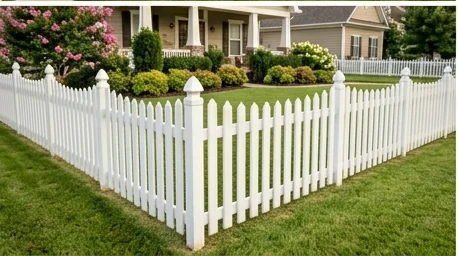
If you want a more refined look, a warmer natural color, and don't mind paying more for it, cedar is worth the difference. It's a good fit for front-yard fencing, decorative sections, or anywhere the fence is a visible part of your property's curb appeal.
You can build either material into most fence styles, from privacy panels to picket to rail-and-board designs. See examples of what's possible with wood on our wood fencing page.
A Note on Installation
Whichever wood you choose, how the fence is installed matters as much as the material itself. Post depth, concrete footings, proper spacing for wood movement, and correct fastener choice (galvanized or stainless to avoid corrosion and staining) all affect how long a wood fence actually lasts. A well-installed pine fence will often outperform a poorly installed cedar fence over time. If you're weighing options or want to talk through what makes sense for your property, give us a call for a free estimate and we'll go over the tradeoffs based on your specific project.
Request a Free Estimate
Fill this out and we'll get back to you, or call or text (931) 651-8856.