Dog Fence Guide: How to Choose the Right Fence to Keep Your Dog Safe
Dog Fence Guide: How to Choose the Right Fence to Keep Your Dog Safe - a guide from Cookeville Fence Co., serving the Upper Cumberland region of Tennessee.
A fence that contains a dog needs more than a standard property-line fence does. Height, gaps, ground contact, and gate hardware all matter more when there's an animal testing the fence every day. This guide covers what to think about before you install, so you end up with something that actually holds up.
Know Your Dog Before You Pick a Fence
The right fence depends on the dog, not just the yard. Answer these questions first:
- Does your dog jump? Athletic breeds can clear fences that would stop a low-slung or older dog. Height needs to match the specific dog, not a general rule of thumb.
- Does your dog dig? Terriers and other digging breeds will work at gaps under a fence line, especially where the ground isn't level.
- Does your dog chew or push through gaps? Small dogs can slip through openings you'd never think twice about until it happens.
- How much space do you have, and how uneven is the terrain? Sloped or rocky yards need extra planning to avoid gaps at the bottom of the fence line.
You don't have to work through this alone. A walk-through of the yard before installation is the best way to catch problems before they become a fence a dog has already learned to beat. On rural lots a septic drain field can dictate where the fence line runs. See fencing a yard that has a septic drain field.
Fence Materials for Containing Dogs
| Material | How it holds up for dogs | What to watch |
|---|---|---|
| Wood | A solid privacy fence with no bottom gaps is one of the more reliable options for diggers and jumpers | Needs to be installed tight to the ground to leave nothing to squeeze under |
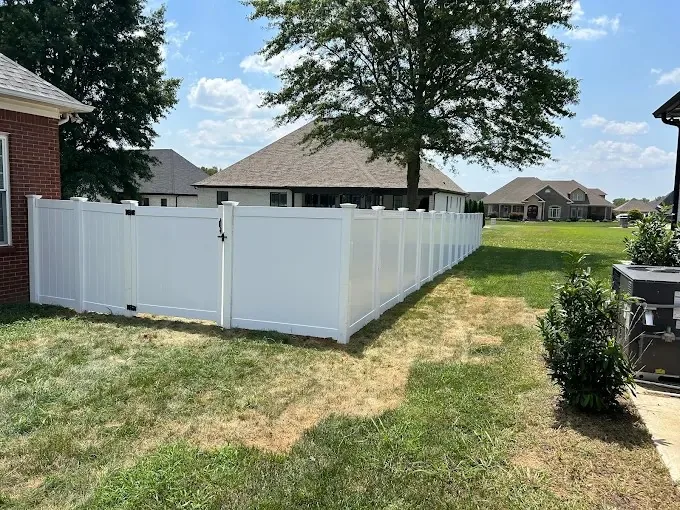
| Vinyl | Same solid-barrier benefit as wood with less long-term maintenance, holds up to leaning and scratching | Bottom edge still has to sit tight to grade |
| Chain link | Practical and budget-friendly containment, especially for larger yards | Does not block sightlines, so reactive dogs may bark more, and it needs the right gauge and post spacing |
| Ornamental iron | Looks good and holds up well | Standard picket spacing usually is not tight enough to stop small dogs, so ask about spacing options |
| Split rail | Built for property lines and larger livestock, not for dogs on its own | Wide open gaps, pair it with wire mesh behind the rails to actually hold a dog |
Different materials hold up differently for pets.
Wood Fencing
A solid wood privacy fence with no gaps at the bottom is one of the more reliable options for dogs that dig or jump. There's nothing to see through and nothing to squeeze under if it's installed tight to the ground. It also blocks sightlines to the street, which can cut down on barking at passersby. See our wood fencing page for style and layout options.
Vinyl Fencing
Vinyl privacy panels give you the same solid-barrier benefit as wood, with less long-term maintenance. For dogs that lean on or scratch at a fence line, vinyl holds up well over time. Check out our vinyl fencing options if low upkeep matters to you.
Chain Link Fencing
Chain link is a practical, budget-friendly option for containment, especially for larger yards. It won't block sightlines the way a solid fence does, so dogs that react to what they see on the other side may bark more at a chain link fence than a privacy fence. It also needs the right gauge and post spacing to hold up against a persistent digger or jumper. Our chain link fencing page covers the basics.
Ornamental Iron Fencing
Ornamental iron looks good and holds up well, but standard picket spacing on decorative iron fencing usually isn't tight enough to stop small dogs from slipping through. If you want the look of iron with reliable containment, ask about spacing options before you commit. More detail is on our ornamental iron fencing page.
Split Rail Fencing
Split rail fencing is built for marking property lines and containing larger livestock, not for containing dogs on its own. The open rail design has wide gaps that most dogs can walk or jump straight through. If you like the look of split rail, pair it with wire mesh or fencing behind it to actually hold a dog. Details are on our split rail fence page.
Bottom Gaps Are Where Most Escapes Happen
Regardless of material, the biggest point of failure for dog containment is the bottom of the fence. Uneven ground, erosion over time, or a fence that wasn't set tight to grade in the first place all create gaps a determined dog will find. On sloped yards, this takes extra attention during installation to keep the bottom edge consistent along the whole run instead of leaving triangular gaps at the low points.
Gates and Latches Matter as Much as the Fence
A fence is only as good as its gate. Loose latches, gates that don't self-close, or hardware a dog can nose open over time are common reasons an otherwise solid fence fails. Self-closing hinges and latches positioned where a dog can't reach them from the ground are worth the small extra cost. If you're adding a gate to an existing fence or replacing failing hardware, our gate installation and repair page covers what's involved.
New Installation vs. Repairing an Existing Fence
If you already have a fence and your dog has started finding ways out, have it looked at before you assume you need a full replacement. Sometimes a section that's rotted, leaning, or has developed a gap can be repaired rather than torn out. Our fence repair page covers common repair situations. For a full new installation, our fence installation page walks through the general process.
What This Costs
Dog containment fencing costs vary by material, yard size, and terrain. We don't publish blanket pricing because every property is different. Our fence cost guide walks through the factors that affect price so you know what goes into an estimate before you call.
Get a Second Opinion Before You Buy
The safest approach is to have someone look at your yard, your dog's habits, and your terrain before you decide on a material and layout. Call us at (931) 651-8856 for a free estimate, or reach out through our contact page. We're happy to walk through options and give you an honest read on what will actually hold up for your situation.
Request a Free Estimate
Fill this out and we'll get back to you, or call or text (931) 651-8856.