Fencing Around a Septic System: What to Know Before the Layout Walk
How to find your drain field before the fence gets laid out, and what to do when the fence line crosses it.
On a city lot in Cookeville, fence layout is mostly about property lines, gates, and where the auger hits chert. Move out to acreage in unincorporated Putnam County, out toward Silver Point, Boma, or Bloomington Springs, or up around Livingston, and there's a second buried system to think about. Much of the rural ground here is on septic rather than municipal sewer, and a drain field is one of the few things on a residential property that a post hole can ruin outright.
It doesn't get talked about because it's invisible. Grass grows over it. People mow it, park on it, and sometimes fence right across it. Then the system backs up and nobody connects it to the fence from two summers ago.
What's actually buried out there
A conventional septic system has three parts that matter here. The tank holds everything from the house while solids settle. Liquid moves to a distribution box that splits the flow. From there, perforated pipe runs into the drain field, also called a leach field or lateral lines, sitting in gravel trenches that let liquid soak into the soil.
The tank is heavy concrete and sits deeper. It's tough. The drain field is the opposite. It's shallow pipe spread across a wide area, and the design depends on the soil staying loose enough to absorb water. It's also bigger than people picture, often taking up a good share of the usable yard. Frequently the exact ground somebody wants to fence for a dog or a garden.
Why a post hole and a lateral line can't share space
An auger doesn't care what's in the way. If it catches a lateral line, it can crack it, crush it, or pull a section apart. Sometimes that shows as a wet spot right away. Sometimes it takes months, and by then nobody's thinking about the fence.
The quieter hazard is equipment traffic. A skid steer or loaded trailer crossing the same track repeatedly packs the soil down, and compacted ground over a drain field stops absorbing water the way it was designed to. Concrete raises the stakes, since a post set in concrete is permanent and displaces soil in a spot that may need to stay permeable. Our page on post depth and concrete standards covers how deep posts go, and those depths next to a drain field make the conflict obvious.
How do you find out where your drain field is?
Start with the paperwork. Septic systems are permitted, and the permit file usually includes an as-built drawing showing the tank location and field layout. In Tennessee those records are held by the state, through the Tennessee Department of Environment and Conservation. Putnam County is served by the Cookeville Environmental Field Office, and TDEC runs an online septic records search. If you bought the place, the drawing may be in your closing packet. Plenty of people have one and don't know it.
A septic contractor or pumping company is the other route. Many can locate a tank and trace the field, and a pumper who has serviced yours may already have notes.
Surface clues help while you wait on records. The tank lid gives you a starting point, and cleanouts near the house tell you which direction the line leaves. Those are approximate. They narrow the search and they are not accurate enough to dig by.
Get the record in hand before the layout walk. Once posts are marked and material ordered, changing the line costs more. Same logic as the prep steps to handle before installation day, which covers the 811 locate and property line marking. Worth flagging: an 811 locate covers public utilities coming to the house. It does not mark your private septic system.
| Source | What you get | Worth knowing |
|---|---|---|
| Septic permit / as-built on file | Drawing of tank, distribution box, and field layout | Held by TDEC at the state level. Start with the online records search |
| Septic contractor or pumper | Located tank, traced field, current condition | Can also tell you if the system was altered after permitting |
The fence line crosses the drain field. Now what?
Three options, and each one gives something up.
Reroute the line. Pull the fence in or push it out so it runs clear of the field. Usually the cleanest answer and usually the one people resist, because it means fencing less yard than they pictured. On acreage that's often fine. On a smaller lot where the field eats the flat ground, rerouting costs you real usable space.
Use a removable or gated section. Where the line has to cross, build a section that comes out. A wide gate, or panels set in sleeves that lift free, gives a septic contractor a way in without cutting your fence. The tradeoff is rigidity. It will never be as solid as a run of set posts.
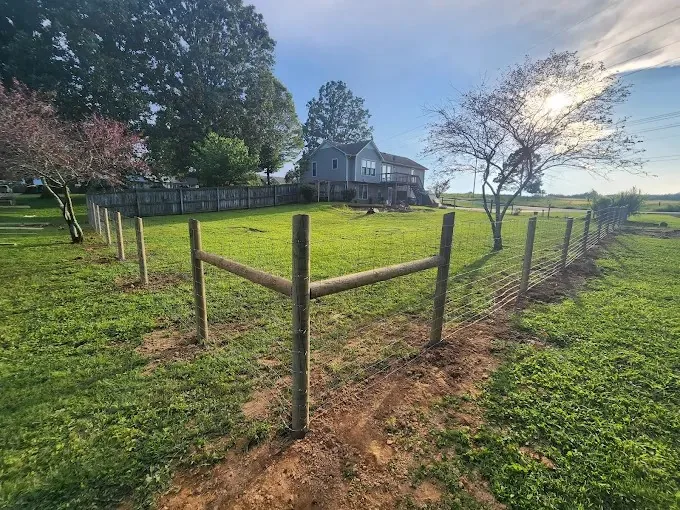
Stop the fence short. Run it to the edge of the field and end it. That leaves the enclosure open on one side, which defeats dog containment but works fine for a fence meant to define space or screen a view. On acreage, stock is its own compaction problem. Cattle and horses loaf in the same spot day after day, and a drain field is not where you want that traffic concentrated. Split rail and farm-style fencing adapts better than a solid privacy run, since post spacing is wider and you have more freedom about where each post lands.
Don't fence the pump truck out
The tank gets overlooked because it seems less fragile than the field. The risk there is access.
A septic tank needs pumping periodically. That's a truck with a hose, and the hose only reaches so far. Your pumping company knows what clearance their truck needs, and a call before the gate gets framed settles it. Box the tank into a corner with no gate wide enough for a man and a hose, and the truck can't reach the tank when it's time to pump.
The fix is easy if caught early. Put a gate on that side, size it for equipment, and keep the approach clear. Swing direction and hardware matter more here than on a decorative gate, since a wide gate on uneven ground will sag if it isn't hung right.
Rock and drain field in the same yard
The soil around Cookeville is the Bodine-Baxter-Mountview association, cherty limestone residuum on the Eastern Highland Rim. In practice that means chert and shallow bedrock. A post hole can stop cold on rock while the next hole along the same run digs clean. The rocky soil and post setting covers that in detail.
Add a septic field and the two constraints work against each other. Rock forces you to shift a post hole. The drain field limits where you can shift it. On a city lot with sewer you just move over and keep digging. On a rural parcel with a field running through the yard, that reflex can drop a post exactly where it shouldn't go.
Karst adds a third layer in parts of the county, since documented sinkholes and sinking streams affect both septic performance and post stability. Our page on fencing over karst and sinkhole-prone ground gets into that, and the fence line drainage and erosion page covers how water crossing a fence line affects the same soil.
So the walk matters more out here. Somebody has to stand on the ground with the septic drawing and the property corners and figure the line from there.
If the fence is already up and you've just learned the field runs under it, the situation is usually better than it sounds. A section can often be pulled and reset rather than the whole run rebuilt, and the same is true when a system is being replaced and the equipment needs a way in. Our fence repair page covers how that work goes.
Bring it up before the estimate is written
If your property is on septic, say so on the first call. It changes the layout conversation and can change the price, since rerouting a line or adding a wide access gate is a real difference in material and labor. Finding out afterward means a change order or a compromise nobody likes.
A written estimate should reflect the line that was actually walked. If the layout bent around a drain field, that shows in the linear footage and the gate count. Our guide to reading a fence estimate covers what a clear one includes, and the permit requirements across the Upper Cumberland page breaks permitting down by municipality and county.
When comparing companies, ask how they handle a septic field. Anyone who works rural property here should have an answer ready. Our notes on choosing a fence company in Cookeville list other questions worth asking, and the Tennessee fence cost breakdown covers what drives the total.
Common questions about fencing near a septic system
Can I put a fence over my drain field at all?
It depends on your system and your layout. We don't set posts in a drain field. Get the as-built drawing from TDEC, confirm the layout with a septic contractor, and plan around what you find. A removable section can sometimes cross a field, but that's a decision made with the drawing in hand.
How far from the tank or lateral lines does a fence have to be?
We won't quote you a number. Septic requirements vary by system type and jurisdiction, and we aren't the authority on it. Ask TDEC or a licensed septic contractor what clearances apply to your property. Once you have that, we can lay the fence out to fit.
What if an auger hits a lateral line?
Stop work and call a septic contractor. A damaged lateral line is repair work for somebody licensed to do it, and patching it yourself or covering it back over creates a bigger problem. This is why the layout walk happens with the septic drawing available.
Does an 811 utility locate mark my septic system?
No. An 811 locate marks public utility lines coming onto the property, like gas, electric, water, and communications. Your septic tank and drain field are private and nobody is coming out to paint them. That falls to the property owner. The Putnam County fence installation page covers what else to have ready before work starts.
If you're on acreage with a septic system and thinking about a fence, call Brian at (931) 651-8856 or request a free on-site estimate. Bring the septic drawing if you have it. If you don't, that's the first thing to chase down.